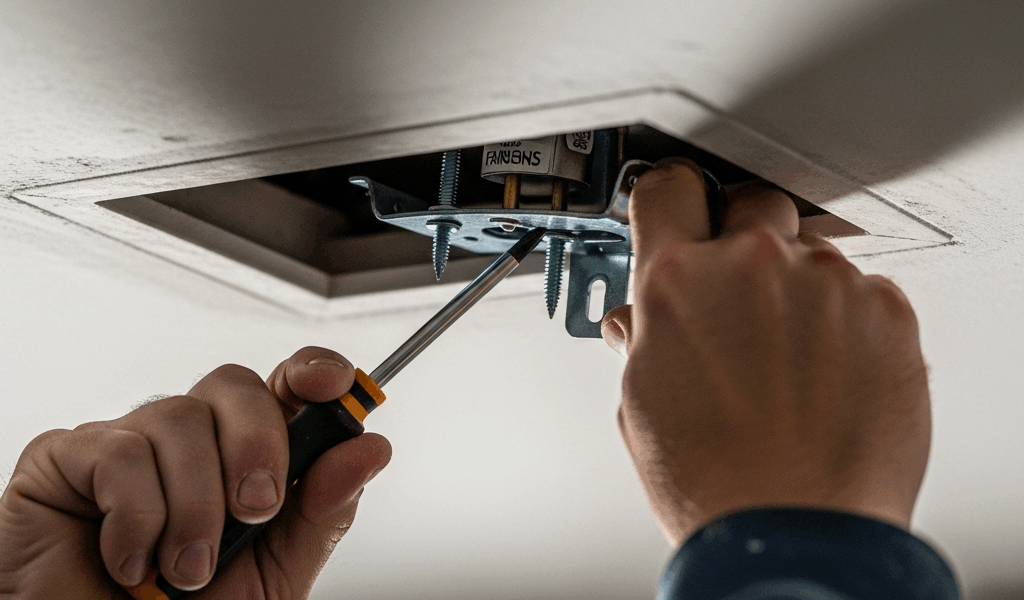
Yes, you can install a ceiling fan where a light fixture is — but only if the electrical box in the ceiling is fan-rated. That is the entire answer. A standard light fixture box holds static weight. A ceiling fan produces dynamic torque from spinning blades, and a box that is not rated for that load will eventually work loose and drop the fan. Here is how to check what you have and what to do next.
The Short Answer: Yes, If the Box Is Fan-Rated
A standard light fixture box is rated for roughly 50 pounds of static weight — plenty for a chandelier or pendant light. A ceiling fan needs a box that supports 35 pounds of static load and resists the rotational torque from the motor and blades. That torque is the difference. A 30-pound fan hanging still is not the same as a 30-pound fan spinning at 200 RPM with wobble from slightly unbalanced blades.
Fan-rated boxes are specifically UL-listed for ceiling fan support. If your existing box is fan-rated, you can swap the light fixture for a ceiling fan without touching the box. If it is not, you need to replace the box before installing the fan. No exceptions.
How to Tell If Your Existing Box Is Fan-Rated
Turn off the breaker. Remove the light fixture. Look at the box.
Fan-rated boxes have a specific marking: look for “Ceiling Fan Rated” or “Fan Rated” stamped or printed on the box. UL-listed fan boxes always carry this marking. If you do not see it, the box is not rated for a fan.
Round plastic boxes or octagon metal boxes installed before 1993 are almost never fan-rated. If your home was built before the early 1990s and you have never replaced the ceiling box, assume it is not rated.
Cross-shaped metal braces or expandable bar hangers visible between the joists may be fan-rated — but check for the UL marking. The bracket itself is not automatically fan-rated just because it spans two joists.
When in doubt, replace the box. A fan-rated remodel brace costs $15 to $30, installs from below without opening the ceiling, and gives you a definitive answer. Thirty dollars and an hour of work is cheap insurance against a fan falling on someone.
Weight and Load Ratings
Standard fan-rated boxes support 35 pounds — the combined weight of the motor housing, mounting bracket, and blade assembly. Most residential ceiling fans under 54 inches weigh less than 35 pounds and fit within this rating.
Larger fans — 60-inch models or fans with heavy light kits — can exceed 35 pounds. Check the fan’s installation manual for the total weight and compare it to the box rating. If the fan exceeds 35 pounds, you need a box specifically rated for that weight, not just a generic fan-rated box.
When You Need an Electrician vs a DIY Project
DIY-appropriate: Replacing an existing fan-rated box with the same type. Installing a ceiling fan in a box that is confirmed fan-rated. No new wiring needed — the existing circuit powers the fan and light.
Requires an electrician: Adding a new circuit for the fan. Running a separate wire for independent fan speed and light dimmer control — most older light fixture circuits have one switched hot wire, so separate controls for the fan and light require an additional conductor or a smart switch solution. Any electrical work in California or other states that restrict DIY electrical work on residential circuits.
Does Ceiling Fan Installation Need a Permit?
Replacing a fixture with a fixture — swapping a light for a fan at the same box — is typically exempt from electrical permits in most jurisdictions. You are not adding a new circuit or running new wire.
Adding a new circuit or running new wire to the location requires a permit in all jurisdictions. No exceptions.
Check with your local authority having jurisdiction — permit requirements for electrical work vary by city and county. Working without a required permit can affect homeowner’s insurance claims if a fire or electrical incident occurs at that location. The permit fee is typically $50 to $150. The insurance coverage gap from an unpermitted installation is worth significantly more.

Stay in the loop
Get the latest northwest electric pros updates delivered to your inbox.