Whole House Surge Protector — Is It Worth the Electrician Visit
Home electrical protection has become harder to navigate with all the conflicting advice flying around.
This article includes affiliate links. We may earn a commission at no extra cost to you.
That conversation in his driveway stuck with me. I spent the next two months talking to electricians, comparing devices at three different hardware stores, and doing the actual math on what breaks when a surge hits. The primary question most homeowners search is simple enough: is a whole house surge protector worth it? They already know they should protect their stuff. They want to know if the electrician visit and the device cost actually deliver real protection. Not theoretical. Real protection for real money.
What a Whole House Surge Protector Actually Does — and What It Doesn’t
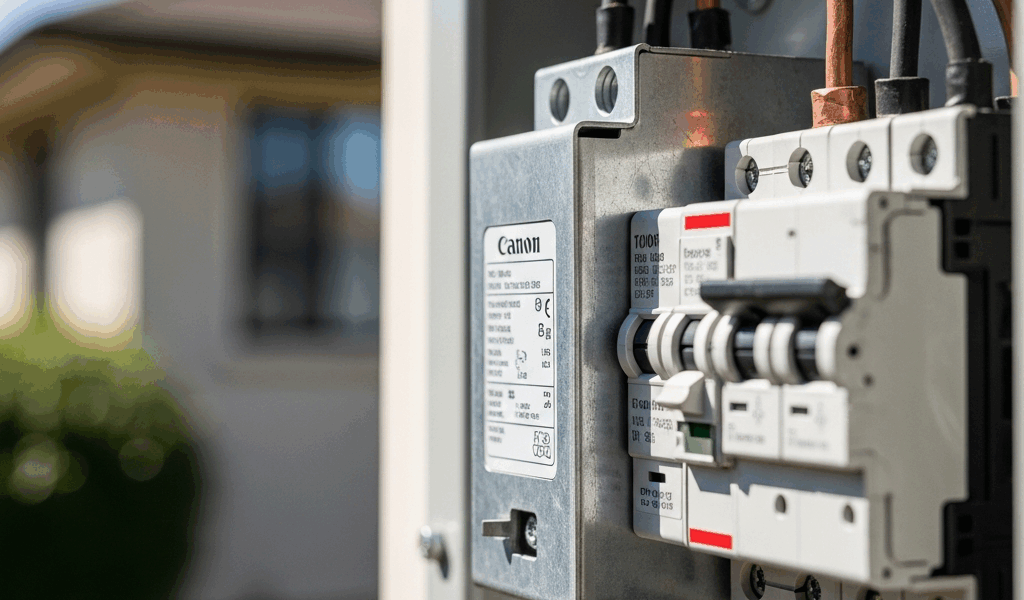
But what is a whole house surge protector? In essence, it’s a Type 2 Surge Protective Device (SPD) that mounts directly at your electrical panel — sitting between the utility lines and your home’s internal wiring. But it’s much more than that.
Its job is specific. It intercepts surges coming from outside your home. Lightning strikes nearby. Utility company equipment failures. Transformer problems on the pole. These external events send massive voltage spikes through your lines, and a properly installed Type 2 SPD catches most of them before they reach your appliances.
Here’s the part most people miss entirely.
Internal surges are a different animal. Your refrigerator compressor firing up. Your microwave cycling. Your clothes dryer running. These create small voltage fluctuations that a whole house protector doesn’t handle. For sensitive electronics — your computer, your router, your television — you still need point-of-use surge protectors plugged directly into individual outlets.
Don’t do what I did. After installing my whole house unit, I assumed my home office was fully covered. It wasn’t. A nearby lightning strike damaged my router even though the whole house protector had technically done its job at the panel. The residual surge traveled through internal wiring after the initial event. I needed a proper desktop power strip — specifically something with individual outlet protection — and I didn’t have one.
So what it actually protects:
- HVAC systems and their control boards
- Major appliances like refrigerators and washers
- Water heaters and furnaces
- Garage door openers
- Electrical system components themselves
What it does not fully protect:
- Computers and laptops (you need a UPS backup for those)
- Network equipment and routers
- Televisions connected to cable or satellite lines
- Devices vulnerable to internal voltage fluctuations
That distinction matters. It changes the entire cost-benefit calculation. You’re not buying complete surge immunity — at least not for every device in your home. You’re buying a critical first line of defense for your most expensive, hardest-to-replace equipment. That’s what makes whole house protection endearing to us homeowners who’ve priced out HVAC replacements lately.
Real Cost — Parts Plus Installation
Worth putting near the top. Price determines whether most homeowners even bother making the call.
The device itself runs $50 to $300. A basic unit lands around $75-$150. A more robust model — something like a Siemens FS140 or an Eaton CHSPT2ULTRA with monitoring capability and higher joule ratings — costs $200-$300. Cheaper options exist at Home Depot or Lowe’s, but electricians generally install quality equipment rated specifically for residential panels.
Installation labor is where your real expense lands. A service call to install a surge protector runs $150-$300. Some electricians charge hourly — usually $75-$150 per hour — and the job takes roughly an hour when your panel has adequate space and proper grounding already in place. If your panel needs work or your grounding system has issues, expect $400-$600.
Total installed cost: $200-$600 for most homes.
I’m apparently the kind of person who gets three quotes before any electrical work, and that approach works for me while going with the first contractor never does. The franchise operation quoted me $450. An independent guy who’d worked in my neighborhood quoted $280. A third came in at $320. I went with the independent contractor. He installed a Siemens SPD, my panel had adequate space, and the whole job was straightforward. Total bill: $295.
Now compare that against what actually breaks without protection.
An HVAC control board replacement runs $800-$2,500 depending on your system. Compressor failure from surge damage? That’s $3,000-$5,000. Water heater replacement costs $1,500-$2,500. Major appliances typically run $1,000-$3,000 when surge-damaged components can’t be repaired. One claim covers the surge protector investment several times over.
What It Protects and What It Does Not
Understanding practical protection means looking at real scenarios — not manufacturer marketing language.
Lightning strikes nearby. Your whole house protector catches the external surge. Your HVAC, water heater, refrigerator, and washing machine keep running. This is the primary scenario the device was designed for. It works well here.
Power line fault from the utility. A downed line or transformer failure sends voltage spikes toward your home. The SPD intercepts them before they hit your panel. Major appliances stay safe. Point-of-use protectors handle any secondary spikes on individual circuits.
Your computer is running during a surge event. Here’s where confusion creeps in. Your whole house protector handles the panel-level threat. But your computer, sitting on a standard outlet, may still experience voltage stress — depending on where and how the surge travels. You need a UPS (uninterruptible power supply) or a quality surge-protected strip at the desk level. Most people don’t realize they need both layers until after something breaks.
Your refrigerator compressor runs fine for fifteen years. Whole house protection contributes to that outcome. So does the built-in capacitor in the compressor itself. You’re getting critical protection against the largest external surges — not a hundred percent of the credit, but probably the most important piece.
Many homeowners install the whole house unit, then pick up a solid APC or Tripp Lite power strip with surge protection and built-in battery backup for the home office setup. That two-layer approach costs around $400-$700 total and covers nearly every realistic scenario most households face.
The Verdict — Worth It for Most Homes
So, without further ado, let’s dive into whether the electrician visit is worth scheduling. Yes. For most homes, the answer is yes.
Your investment is $200-$600. Replacing one surge-damaged major appliance costs $800-$5,000. Standard homeowner’s insurance often doesn’t cover surge damage — you’d need a specific rider for that. Even a modest twenty percent chance of a meaningful surge event over ten years makes the math favorable. Homes in lightning-prone areas see better odds than that regularly.
Homes that should definitely get a whole house protector:
- Houses in lightning-prone regions — Florida, the Gulf Coast, and the Midwest get hit hardest
- Homes with recently replaced or upgraded HVAC systems
- Properties with expensive appliances less than five years old
- Homes with older electrical panels and grounding systems (these need it most, ironically)
- Properties that have already experienced previous surge damage
Homes where the urgency is lower:
- New construction with modern surge-resistant wiring already built in
- Apartments or rentals where you don’t control the electrical infrastructure
- Homes in areas with reliable utility grids and minimal lightning activity
- Properties where major appliances are already near end-of-life anyway
Even in lower-urgency situations — honestly — the device still pays for itself if it prevents a single significant repair bill.
One thing worth saying about the installation itself: choose your electrician carefully. You want someone licensed, experienced, and willing to actually inspect your panel while they’re already there. A good electrician will flag grounding issues, confirm your panel has space for the SPD, and tell you upfront if anything needs upgrading. An electrician charging $150 for the whole job probably isn’t doing thorough work. The middle-ground price — around $250-$350 — usually signals solid, professional service.
Frustrated by a vague quote from the first electrician I called, I pushed my second guy to walk me through the inspection while he worked. He discovered a loose connection at my ground rod. That was 2021. He fixed it for an additional $120, and that second check probably saved me thousands down the road.
The real verdict: call the electrician. Get a quote. Compare it to what your HVAC system costs to replace. For almost every homeowner who can handle the upfront installation cost, the whole house surge protector is worth every dollar.
A surge device does not add branch-circuit capacity; evaluate it alongside the home-office circuits, outlets and UPS plan.

Stay in the loop
Get the latest northwest electric pros updates delivered to your inbox.