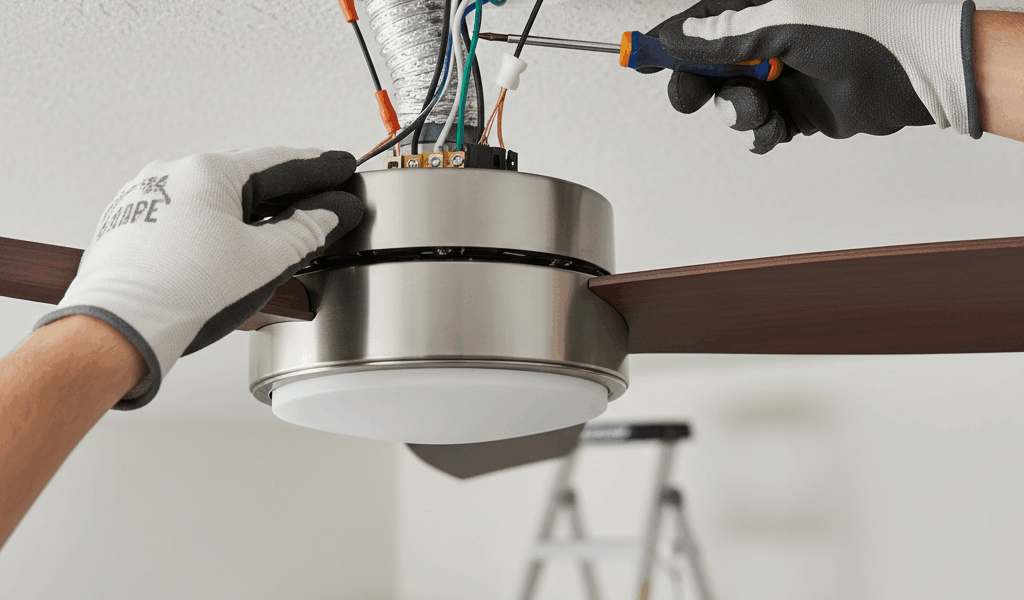
Adding a Ceiling Fan Where You Only Have a Light Fixture
Ceiling fan conversions have shifted noticeably with all the box ratings, switch configurations, and structural requirements flying around. As someone who has installed fans in every type of ceiling situation, I got hands-on with when this project is straightforward and when it gets complicated. Today, I will share it all with you.
Why People Want This Conversion
Probably should have led in this part, truthfully—ceiling fans reduce cooling costs in summer and redistribute heat in winter:

Many homeowners want fans where only light fixtures exist. The good news: conversion is usually possible, but it requires proper support.
The Weight Issue
That’s what makes box selection endearing to us safety-conscious electricians—it’s the difference between safe and dangerous:
- Light fixtures weigh a few pounds
- Ceiling fans weigh 25-50 pounds and generate rotational forces
- Standard light boxes can’t handle this load safely
- Fan-rated boxes mount directly to ceiling joists and are required by code
Wiring for Separate Controls
Want to control the fan and light independently? You’ll need two separate switches, which may require running additional wire. Otherwise, a single switch controls both, or you rely on pull chains and remote controls.
Existing Wiring Considerations

Some older homes have wiring that barely meets minimum requirements. Adding fan motor load might exceed circuit capacity. An electrician can evaluate whether existing wiring supports a fan safely.
The Professional Advantage
Ceiling fan installation involves working overhead with electrical connections and heavy fixtures. Proper installation ensures the fan operates safely for years. Most electricians complete fan installations in about an hour—money well spent for peace of mind.




Stay in the loop
Get the latest northwest electric pros updates delivered to your inbox.